
About Seven Fields Nature Reserve
A Living Legacy in the Heart of North Swindon
Seven Fields Nature Reserve is a 100-acre haven of biodiversity nestled in a valley between Penhill and Haydon Wick in North Swindon, Wiltshire. Since receiving Local Nature Reserve designation in 1995, this remarkable landscape has been protecting some of the finest wildflower meadows in Wiltshire, ancient woodland, and rare medieval agricultural features.
Our Story
The Seven Fields Conservation Group was founded in 1989 by dedicated local volunteers committed to preserving this special place for future generations. What began as a grassroots movement has grown into a 35-year legacy of community-led conservation. In our first year, volunteers planted 2,000 trees and shrubs along the northern slopes—a testament to the power of collective action.
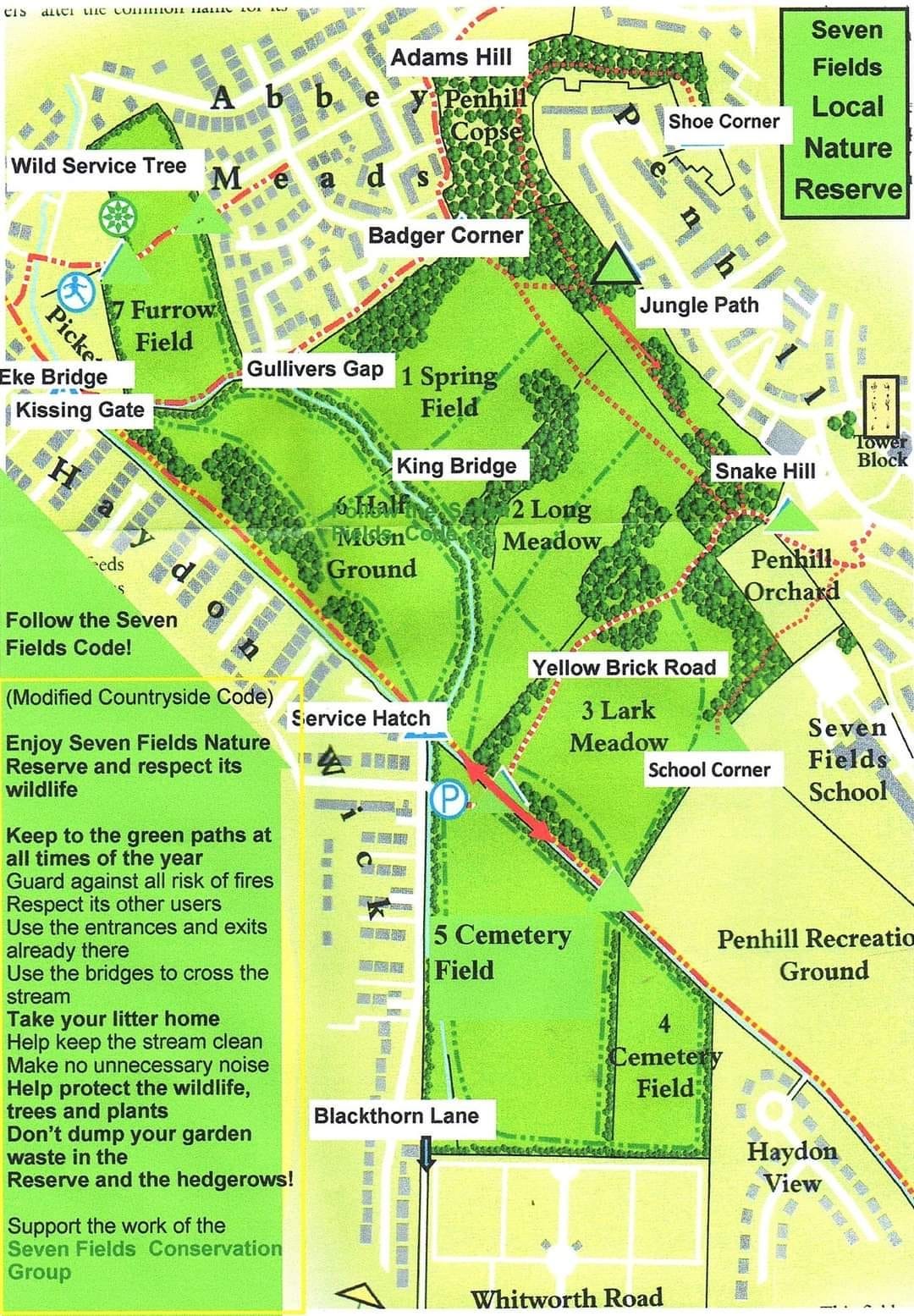
The reserve takes its name from seven distinct fields, each with unique characteristics:
Spring Field & Long Meadow - Over 200 species of wildflowers including rare orchids
Furrow Field - Rare medieval ridge and furrow patterns from ox-drawn ploughs
Penhill Copse - Ancient woodland dating back to at least 1796
Cemetery Field - Managed meadow with early orchid species
Lark Meadow - Natural habitat reverting to hawthorn thicket
Half Moon Ground - Historic bridle path with crack willows
Old Events Field - Community space with football pitch area
What Makes Seven Fields Special
Wildflower Meadows: Our hay meadows burst with colour mid-summer, displaying Ox Eye Daisies, Vetches, Ladies Bedstraw, Yellow Rattle, Scabious, and Marsh, Pyramidal and Bee Orchids. Traditional hay cutting in late summer ensures these delicate species thrive year after year.
Ancient Woodland: Penhill Copse shows every indicator of ancient woodland, with diverse tree species, rich ground flora including three varieties of violet, and wildlife from Greater Spotted Woodpeckers to Tawny Owls.
Rare Trees: Home to Wiltshire’s oldest and largest Wild Service Tree—a 120-year-old specimen that’s a living connection to Britain’s woodland heritage.
Historic Landscape: Furrow Field preserves well-documented medieval ploughing patterns now rare in England, offering a window into centuries of agricultural history.
Living Waterway: Haydon Brook flows through the reserve from its source near Whitworth Road, eventually joining the River Ray and Thames, supporting sticklebacks, voles, and frogs along its plant-rich banks.
Our Mission
This Substack exists to:
Celebrate the natural beauty and biodiversity of Seven Fields
Educate visitors about the reserve’s ecology, history, and conservation
Connect the community with nature on their doorstep
Advocate for the protection of local green spaces
Inspire the next generation of conservation volunteers
Governance & Partnership
Seven Fields is owned by Swindon Borough Council and looked after by Haydon Wick Parish Council, which maintains litter bins, cuts desire lines during peak months, and coordinates volunteer litter picking.
Why Subscribe?
Whether you’re a regular dog walker, a nature enthusiast, a local history buff, or simply curious about the countryside in your backyard, this Substack offers:
Seasonal wildlife guides and what to spot when you visit
Deep dives into the reserve’s ecology and conservation science
Historical features connecting past and present
Volunteer opportunities and community events
Photography showcasing the reserve through the seasons
Conservation updates and habitat management insights
Get Involved
Visit: Seven Fields is open to all. Access points include Winterslow Road in Penhill and paths from Haydon Wick and Abbey Meads.
Learn More: Visit the official Haydon Wick Parish Council page
Wildlife Emergencies: If you need help with an injured or dead bird, please contact RSPB
About the Author
This Substack is written by passionate advocates for Seven Fields Nature Reserve, combining local knowledge, conservation science, and community stories to bring this special place to life online.
Seven Fields Nature Reserve: Where medieval history meets modern conservation, and where over 200 species of wildflowers remind us that nature thrives when communities care.
